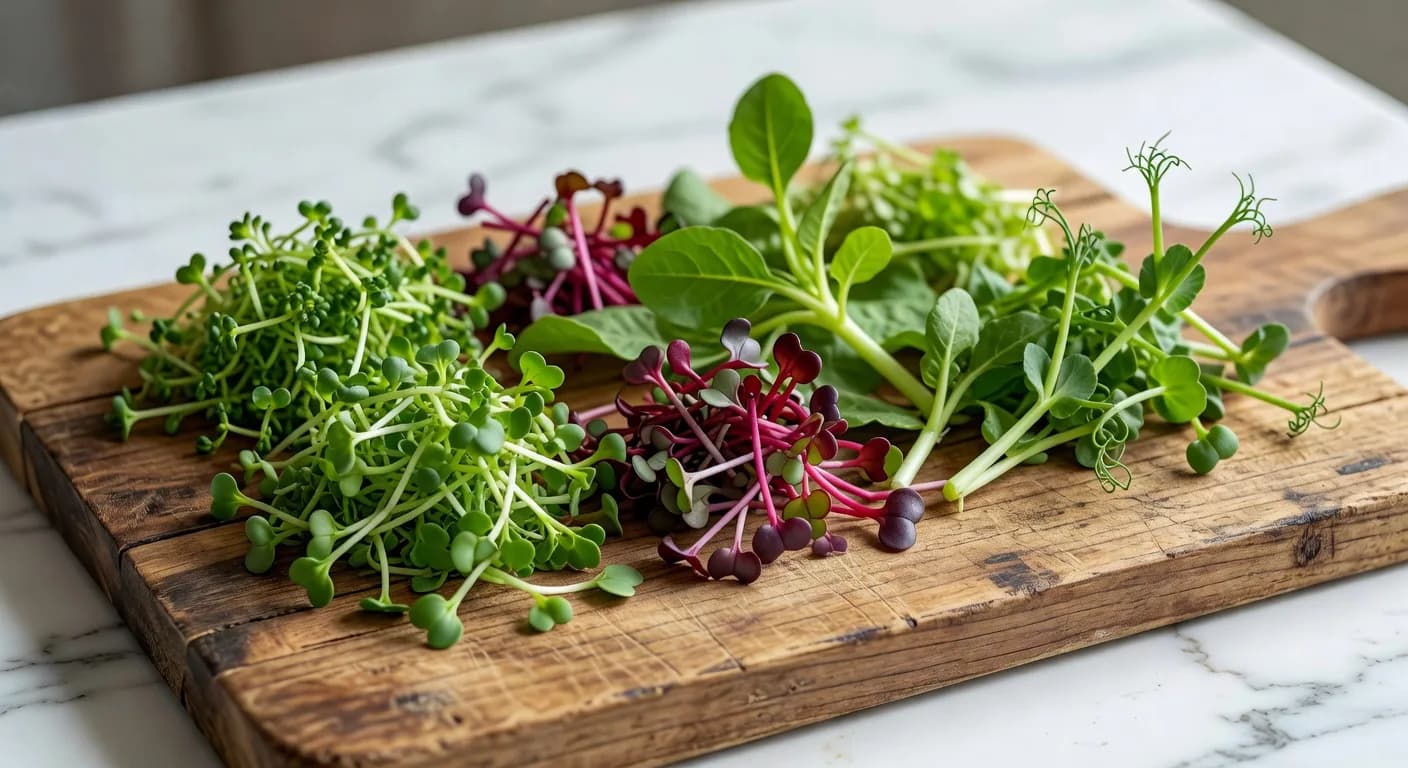
Microgreens are young plants harvested 7–21 days after germination, when they develop their first true leaves. These miniature plants contain up to 40 times more nutrients than mature plants of the same variety, according to a study by the USDA.
Why Are Microgreens a Superfood?
A study published in the Journal of Agricultural and Food Chemistry showed that microgreens contain significantly more vitamins, minerals, and antioxidants compared to mature vegetables. This makes microgreens one of the most nutrient-dense foods on the planet.
| Variety | Key Nutrients | Flavor | Harvest Time |
|---|---|---|---|
| Broccoli | Sulforaphane, Vitamin C, K | Mild, fresh | 8–12 days |
| Red Amaranth | Iron, Vitamin A, E | Earthy, nutty | 10–14 days |
| Sunflower | Proteins, Zinc, Magnesium | Nutty, crunchy | 10–12 days |
| Pea | Vitamin C, Folic acid | Sweet, fresh | 10–14 days |
| Radish | Vitamin B6, Potassium | Spicy, peppery | 6–10 days |
| Mustard | Vitamin K, Calcium | Piquant | 8–12 days |
Nutrients in Microgreens and Their Role
- Polyphenols and carotenoids – antioxidant plant compounds present in high levels
- Vitamin C, which contributes to the normal function of the immune system, and zinc
- Vitamin K, which contributes to the maintenance of normal bones – in concentrations higher than mature vegetables
- Sulforaphane – a bioactive compound from broccoli that research studies for its role in the body's own enzyme systems
- Dietary fiber and plant enzymes, a natural part of a varied diet
- Folate and potassium – potassium contributes to normal blood pressure
How to Use Microgreens?
Microgreens are incredibly versatile in the kitchen. They can be used as garnish, in salads, smoothies, sandwiches, or as an addition to main dishes. The key is to consume them fresh, as cooking destroys some of the nutrients.
Our Microgreens Selection
At Faga.bio, we offer 6 varieties of fresh microgreens, grown without pesticides or artificial fertilizers under controlled conditions. Each order is cut on the day of delivery to ensure maximum freshness and nutritional value.
FAQ
Are microgreens the same as sprouts?
How many microgreens should I eat daily?
Can I grow microgreens at home?
How do microgreens differ from baby vegetables?
Are Faga.bio microgreens organically certified?
Sources
- Ghasemzadeh Z, Farhadi N, Hosseini M, Najafi S (2022). Sprouts and Microgreens—Novel Food Sources for Healthy Diets. Foods. PMID: 35807490
- Kaya B, Yardımcı H (2025). Microgreens: nutritional properties, health benefits, production techniques, and food safety risks. Crit Rev Food Sci Nutr. PMID: 38048281
- Popović BM, Bursać M, Vidaković N, Perić J, Bursać M, Mandić J, Petrović J, Nikolić MR, Sakan D, Četojević-Simin D, Grulović J, Sakač M, Pojić M, Vujasinović D, Pezo M, Tumbas Šaponjac V (2025). A Comprehensive Antioxidant and Nutritional Profiling of Brassicaceae Microgreens. Antioxidants (Basel). PMID: 40002378
- Kabbash YM, Metwally K, Abdel-Latif S, El-Said HM (2024). Nutritional quality profiles of six microgreens. Sci Rep. PMID: 38640751
- Singh P, Minhas G, Kumar R, Grewal V, Singh K, Chopra S, Singh B, Rawat S, Kumar V, Upadhyay R, Kaur R, Grewal S (2023). Sulforaphane Bioavailability in Healthy Subjects Fed a Single Serving of Fresh Broccoli Microgreens. Antioxidants (Basel). PMID: 37890940