Two regulations, one question: who will control the seed?
There are currently two completely separate legislative battles being fought over seeds in the European Union, and they are easy to confuse. The first is the reform of the rules on Plant Reproductive Material (PRM) - these are the rules on who may produce, register and sell seed. The second is the deregulation of the so-called new genomic techniques (NGT), that is, plants obtained through CRISPR and similar gene-editing procedures. Two different regulations, two different processes, but together they both sketch the answer to a single question: will seed diversity remain a common good or increasingly become private property.
A lot of fear and half-truths are circulating online - from claims that swapping seed over the garden fence will become illegal to claims that old varieties will be banned. As a shop that lives from open-pollinated (self-sustaining, samenfeste) old varieties, we have an interest in speaking about this honestly rather than scaring you. That is why we went through the official documents of the European Commission, the Council and the Parliament. Here is what is really changing, where the concerns are justified, and where they are exaggerated.
1. The seed regulation reform (PRM): rules older than 60 years
On 5 July 2023 the European Commission proposed a new regulation that would replace as many as ten existing directives on seeds, tubers, cuttings and seedlings. Some of these rules date back to the 1960s. The goal the Commission states is simplification, but for small producers and keepers of old varieties something else is crucial: how the new rules will treat varieties that do not fit the standard, commercial mould of uniformity.
The existing system requires that a variety be registered before it may be placed on the market, and registration is traditionally based on the DUS criteria - distinctness, uniformity and stability. The problem is that many old, locally adapted varieties are by definition not uniform - it is precisely that genetic diversity that makes them resilient. That is why the question of exceptions for so-called conservation varieties is at the heart of the entire reform.
The European Parliament adopted its first-reading position on 24 April 2024, while the Council of the EU accepted its negotiating mandate only on 10 December 2025. Only after that do the so-called trilogues begin - closed negotiations between the Parliament, the Council and the Commission over the final text. In other words: at the time of writing (July 2026) the PRM regulation is NOT YET in force and the final wording of the exceptions has not been concluded. Anyone who claims to already know exactly how it will read is making it up.
What specifically changes: before and after
| Area | Current system (directives) | Proposed new system (under negotiation) |
|---|---|---|
| Variety registration | Strict registration under DUS criteria for everything placed on the market | Milder conditions for conservation and locally adapted varieties |
| Exchange among gardeners | Legal grey zone, formally restricted | Exchange in kind and non-profit sharing explicitly exempted |
| Seed for amateurs | Subject to the same rules as commercial seed | Exemption from registration and certification foreseen |
| Conservation associations and networks | Unclear status | Dynamic conservation on farms and in gardens recognised, non-profit |
| Organic (bio) seed | Tested under conventional conditions | Adapted conditions, testing under organic conditions |
As can be seen, the PRM reform itself - at least in the drafts so far - moves more in the direction of easing things for small suppliers and variety keepers than towards bans. The main risk is not a ban on old varieties, but the administrative burden: whether the exceptions will be broad enough and clearly enough written that a small cooperative or family shop can actually make use of them without an expensive lawyer. That is the detail being fought over in the trilogues and the one to watch.
2. NGT / CRISPR: here the matter is more serious and - already decided
Unlike the PRM reform which is still ongoing, the regulation on new genomic techniques has already passed. The Council and the Parliament reached a provisional agreement on 4 December 2025, and the Council of the EU formally adopted the regulation on 21 April 2026. It introduces a completely new logic for plants obtained through gene editing such as CRISPR.
The regulation divides NGT plants into two categories. Category 1 (NGT1) covers plants considered equivalent to those created through conventional breeding or natural mutation - these are exempted from most of the existing GMO rules. Category 2 (NGT2) covers more complex modifications and remains under the existing, stricter GMO legislation, including risk assessment and mandatory labelling.
A key detail that directly concerns gardeners: products from NGT1 plants will be exempt from the GMO label for consumers - so the fruit in the shop will not state that it is genetically edited. But for seed, labelling remains mandatory. And more importantly: the new genomic techniques remain entirely BANNED in organic (bio) production.
Where the concerns about NGT are justified
Here we have to be honest: part of the criticism is well-founded, and not a conspiracy theory. Organisations such as Save Our Seeds, Corporate Europe Observatory and the ARC2020 network warn of three specific, documented problems.
The first is patents. Unlike classic old varieties that no one owns, plants obtained through NGT can be patented. Critics warn that an increase in patented seed could strengthen the grip of a handful of large seed corporations over farmers and small breeders. The EU regulation itself tacitly acknowledges this: when registering an NGT1 plant, companies must declare all existing or pending patents, an expert group has been established, and the Commission has committed to publishing within one year a study on the impact of patents on innovation and seed availability. If there were no problem, that study would not be needed.
The second problem is the absence of coexistence rules for NGT1. In the text so far there is no obligation to publicly know where NGT1 plants are grown. For organic and GMO-free producers - and that includes serious keepers of old varieties - this means a real risk of uncontrolled cross-pollination (contamination), without transparency about who is responsible for it. The third, related problem is liability: existing legislation usually burdens the farmer who grows the crop, rather than whoever patented and developed the seed.
What this means for small suppliers and old varieties
If we bring both regulations together, the picture is nuanced. The PRM reform, if the exceptions remain in their current form, actually gives legal space to variety keepers and seed exchange. The NGT regulation, on the other hand, in the long run intensifies the pressure of the corporate, patented seed model. For someone who values open-pollinated (samenfeste) varieties, the conclusion is clear: the value of seed you can save yourself, re-sow and share - is rising, not falling.
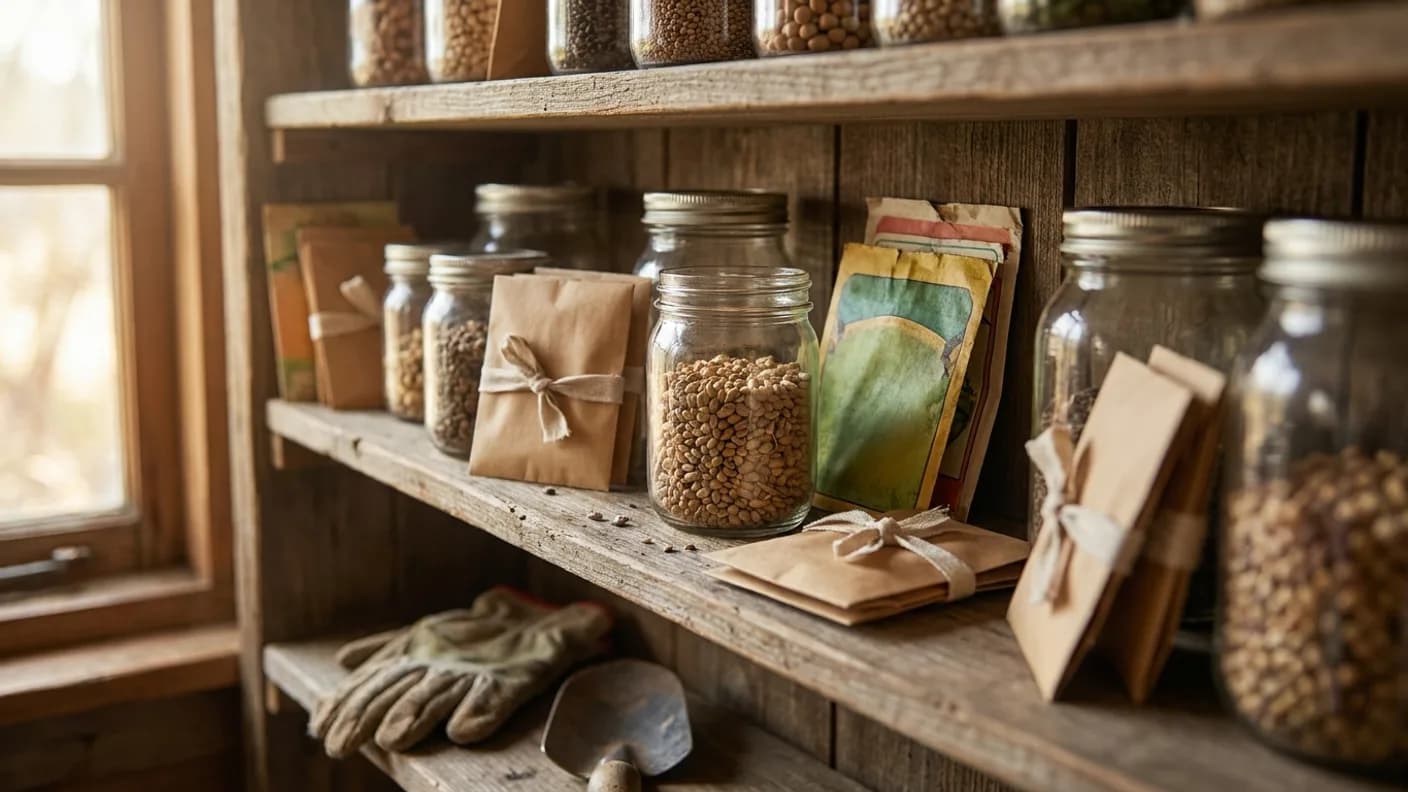
This is exactly where we position ourselves. faga.bio works with old, open-pollinated varieties that are not hybrids and are not patented. That means the seed you buy from us you can obtain again next year from your own harvest - without dependence on any corporation and without a single legal condition. This is the oldest and most secure form of food independence that exists, and no regulation from Brussels can take it away as long as there are people who keep the varieties alive.
A variety you can propagate yourself needs no permit to survive - it only needs someone to sow it.
Practical tips: how to preserve diversity in your own garden
- Choose open-pollinated (samenfeste) rather than hybrid (F1) varieties - only from these can you reliably save your own seed that produces the same plant next year.
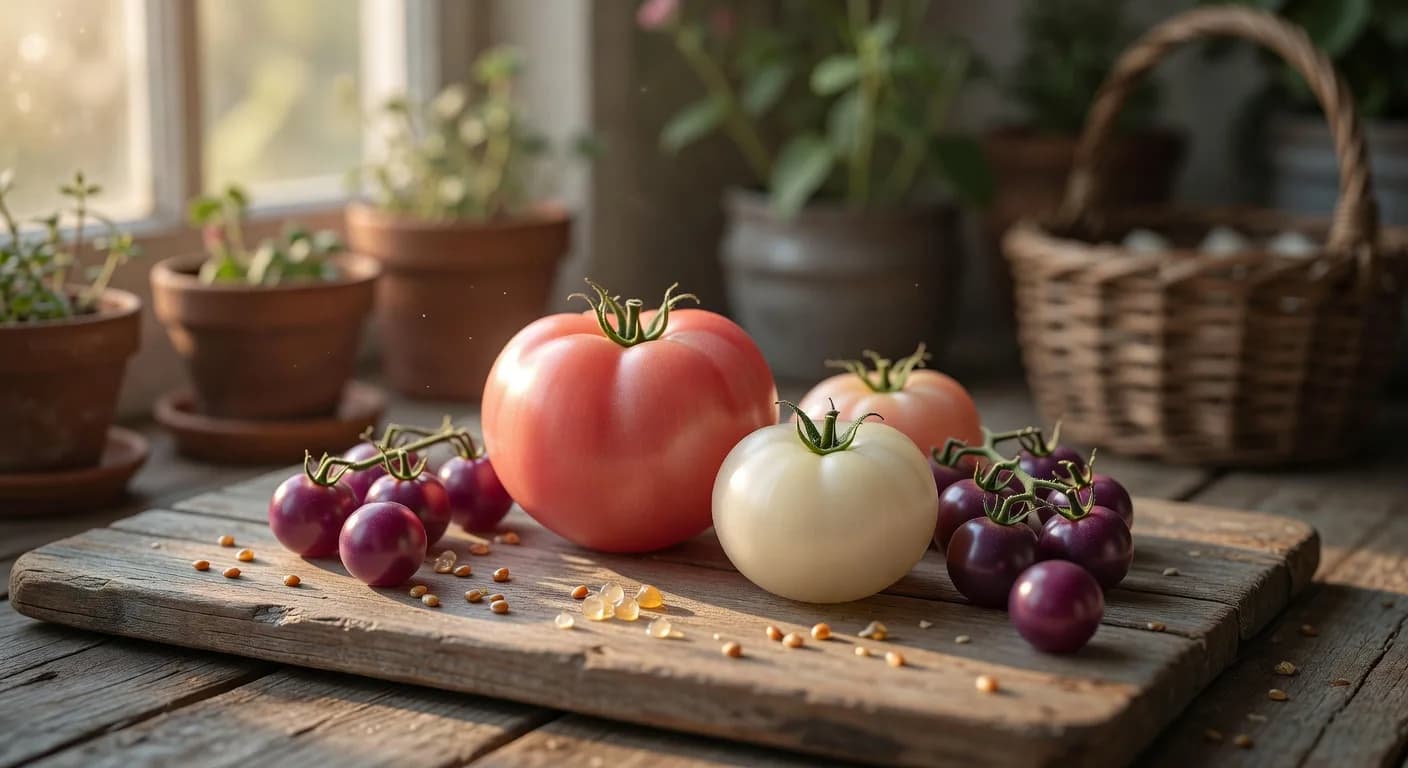
- Learn the basics of seed saving: tomatoes, beans, peas, lettuce and peppers are ideal for beginners because they are easy to clean and germinate for a long time.
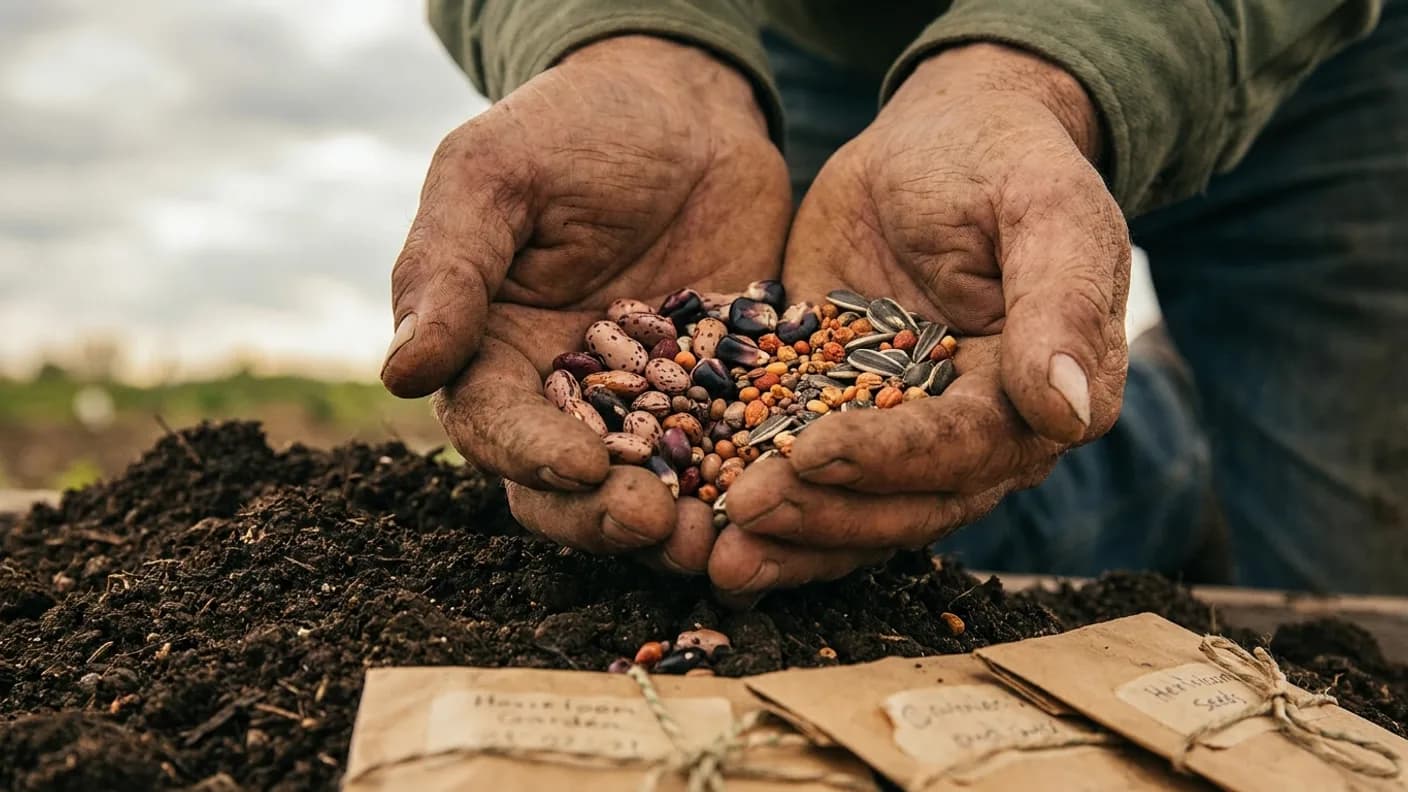
- Sow and save seed every year, even a small amount - a living variety that is continuously grown stays adapted to your soil and climate (dynamic conservation).
- Exchange seed with other gardeners and local networks - it is precisely this non-profit exchange in kind that the new PRM drafts explicitly protect.
- Keep short notes: variety name, year, how it behaved. In doing so you become a keeper of a documented variety, not just a user.
- Support local shops and cooperatives that keep old varieties - demand is the only thing that keeps a commercial supply of diversity alive.
- Do not put everything on one variety: grow several different ones per vegetable type as your own small bank of diversity.
FAQ
Will I be forbidden from exchanging seed with my neighbour or at a seed swap?
Does the new regulation mean old varieties will disappear from the market?
Is CRISPR seed now allowed in the EU?
Can genetically edited plants end up in organic (bio) cultivation?
Why is there so much talk about patents?
What is the best thing I can do as a small gardener?
Sources
- European Commission, Food Safety - Future of EU rules on plant and forest reproductive material: Quelle
- Council of the EU (Consilium), Council agrees negotiating position on new rules for plant reproductive material, 10.12.2025: Quelle
- Council of the EU (Consilium), New genomic techniques: Council adopts new rules, 21.04.2026: Quelle
- European Parliament, Epthinktank - Labelling of products derived from new genomic techniques (NGTs), 12.02.2026: Quelle
- Save Our Seeds - New genomic techniques (critical overview): Quelle
- Corporate Europe Observatory - Biotech lobby groups set to trap farmers in patent minefield, 04.2026: Quelle