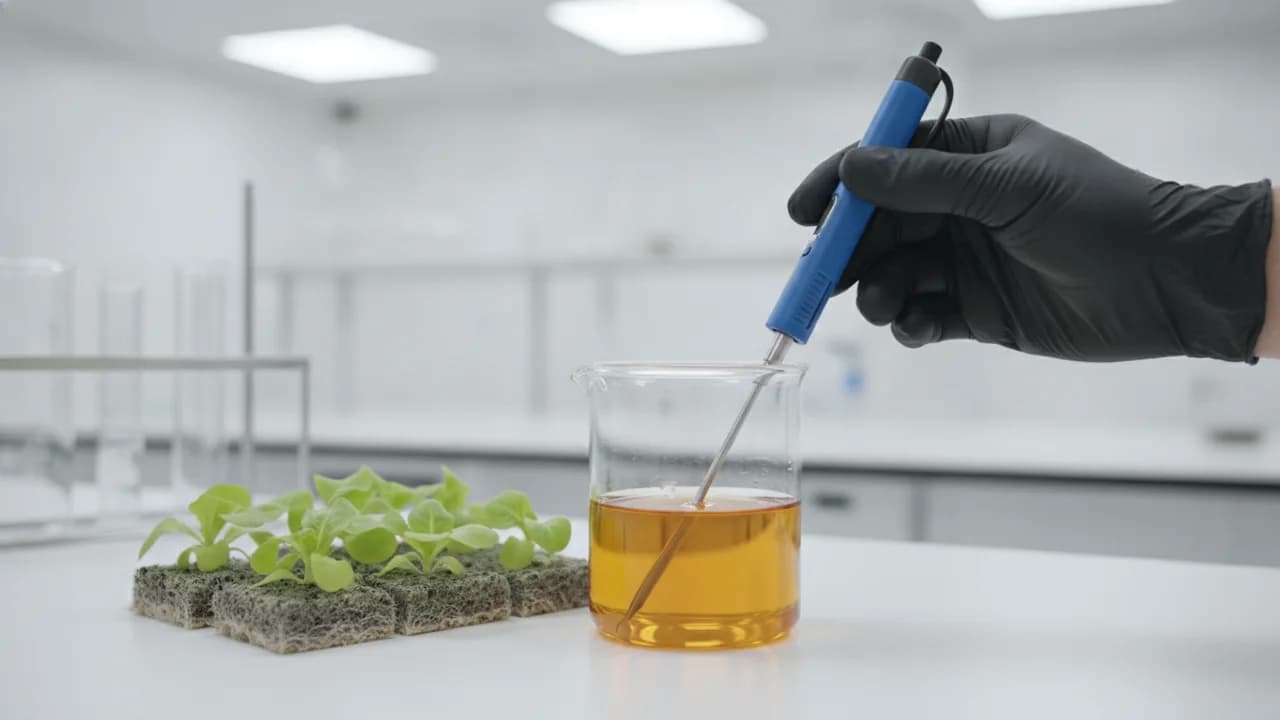
Hydroponics is a method of growing plants without soil, in which the roots grow directly in water enriched with dissolved mineral nutrients. Instead of drawing nutrients from the ground, the plant receives them directly from a precisely dosed nutrient solution. The name comes from the Greek words "hydro" (water) and "ponos" (labour), literally meaning "working water".
Although many people think of hydroponics as a modern technology, the principle is thousands of years old — from the Hanging Gardens of Babylon to the floating gardens of the Aztecs (chinampas). Today, hydroponics is used in everything from small home systems on a windowsill to large commercial greenhouses and vertical farms.
How Does Hydroponics Work?
To grow, a plant needs only a few key elements: water, dissolved nutrients, light, carbon dioxide, and oxygen for the roots. Soil is essentially just a medium that delivers water and minerals — if we can supply those elements directly, soil becomes unnecessary.
In a hydroponic system, the roots are submerged in the nutrient solution or regularly moistened with it. The solution contains all the macronutrients (nitrogen, phosphorus, potassium, calcium, magnesium, sulphur) and micronutrients (iron, manganese, zinc, boron, and others) that the plant would otherwise find in fertile soil. Crucially, the roots must also have access to oxygen at the same time — without enough dissolved oxygen the roots suffocate, which is why most systems use an air pump or constant water movement.
The Four Pillars of Every Hydroponic System
- Water — the carrier of all nutrients and the foundation of the entire system
- Dissolved nutrients — mineral salts (macro- and micronutrients) in a precisely dosed concentration
- Oxygen — dissolved oxygen around the roots, essential for root respiration and to prevent root rot
- Root medium or support — an inert substrate (perlite, coco coir, clay pebbles, rockwool) that holds the plant but contains no nutrients itself
The Main Hydroponic Systems
There is no single "right" hydroponic system — there are several proven methods, each with its own advantages, level of complexity, and ideal use. Here is an overview of the most important systems:
| System | How it works | Suitable for | Effort |
|---|---|---|---|
| DWC (Deep Water Culture) | Roots hang permanently in aerated nutrient solution; an air pump supplies oxygen | Lettuce, basil, leafy greens | Low |
| NFT (Nutrient Film Technique) | A thin film of solution flows continuously over the roots through sloped channels | Lettuce, strawberries, herbs | Medium |
| Kratky method | A passive system with no pump; the solution level drops as the plant grows, creating an air gap | Lettuce, kale, fast leafy greens | Very low |
| Drip system | Solution is delivered drop by drop to the base of each plant via a pump and timer | Tomatoes, peppers, cucumbers | Medium |
| Aeroponics | Roots hang in the air and are sprayed with a fine mist of nutrient solution | Leafy greens, cuttings, potatoes | High |
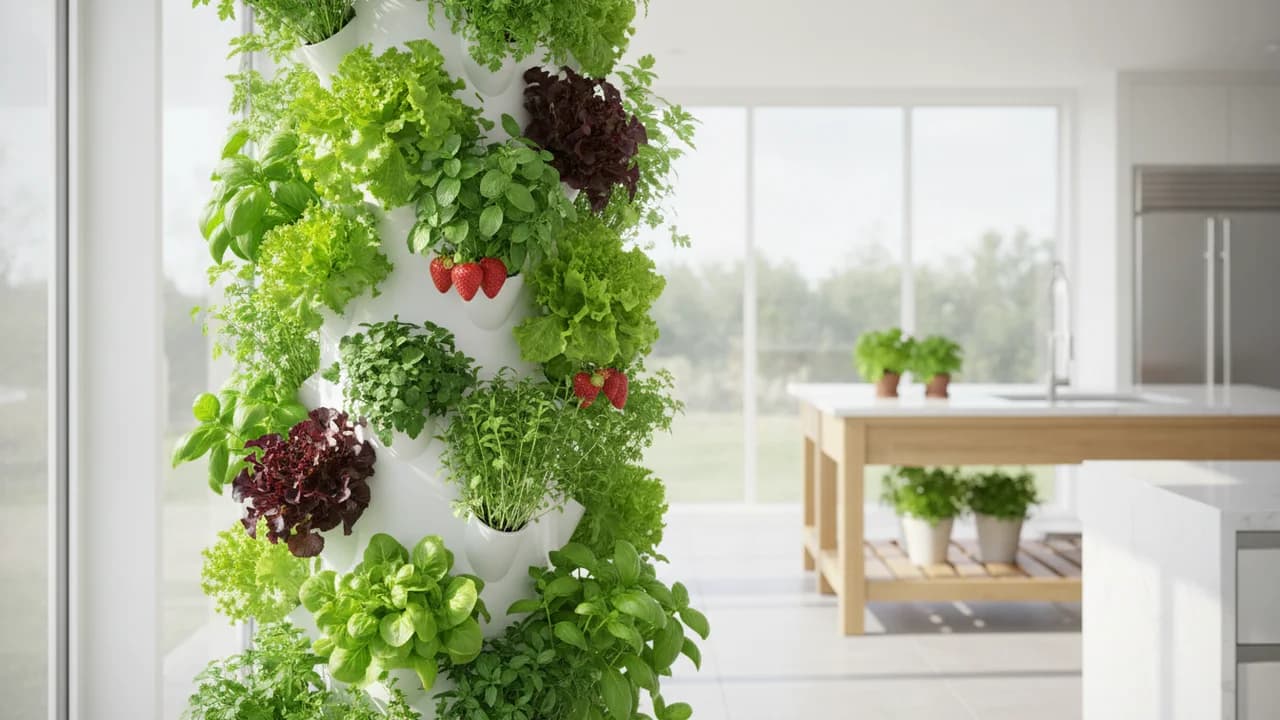
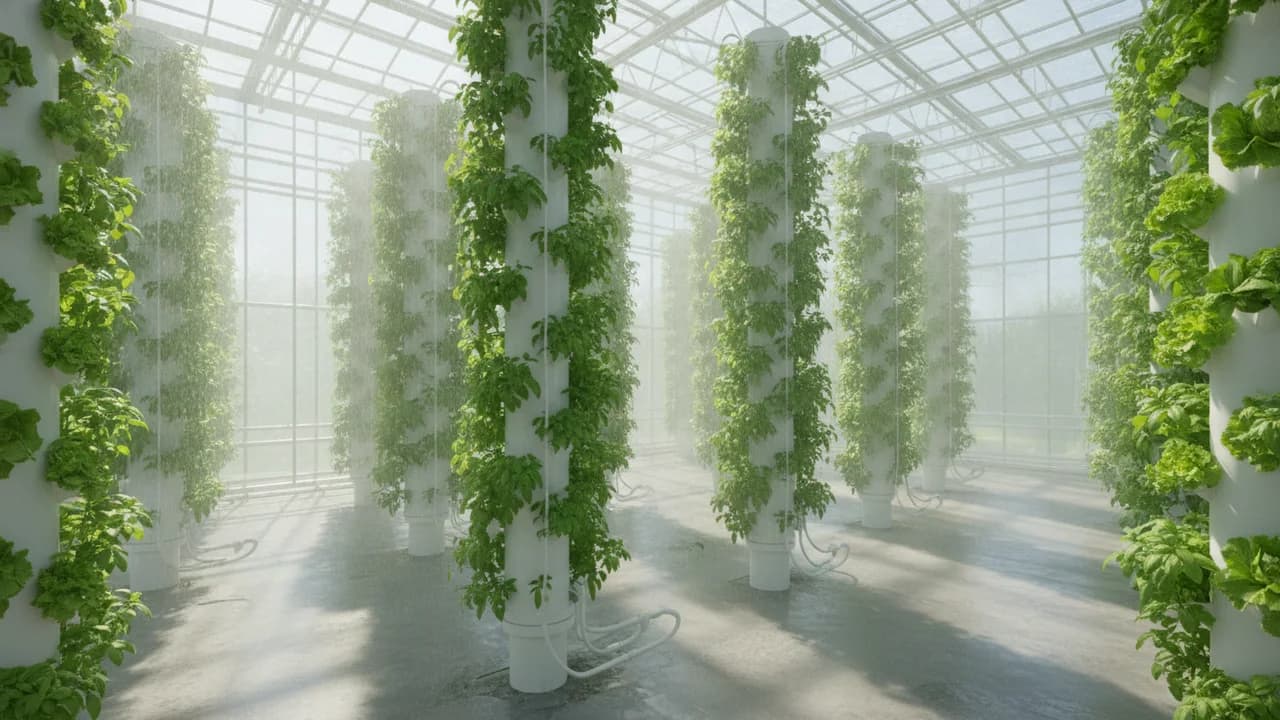
| Vertical tower | Plants are arranged in columns; the solution circulates from top to bottom | Lettuce, strawberries, herbs, microgreens | Medium |
For beginners, DWC and the Kratky method are the most accessible, as they require minimal equipment. Vertical towers are especially appealing for home growing because they allow many plants in a small footprint — ideal for balconies, terraces, and indoor spaces.
Benefits of Hydroponic Growing
Hydroponics is not just a technical curiosity — it brings concrete benefits that have made it an increasingly important part of sustainable food production, especially in urban areas and regions facing water scarcity.
- Dramatic water savings — closed systems recirculate the solution and use up to 90% less water than soil growing; some analyses report that hydroponics can use roughly 13× less water per unit of yield
- Space savings — by stacking plants vertically, far more can be grown in the same area, which is ideal for cities
- Faster growth — roots have direct access to nutrients and oxygen, so plants often grow faster than in soil
- Year-round growing — under controlled conditions, harvesting is possible regardless of the season or weather
- No weeds — no soil means no weeds and no need for herbicides
- Fewer soil-borne diseases — removing the soil also removes many pathogens and pests that live in it
- Predictable yield — with precise control of nutrients and conditions, results are more uniform and easier to reproduce
Challenges and Limitations
Hydroponics also has its challenges. A realistic picture helps you make a good decision and avoid disappointment:
- Dependence on electricity — most systems rely on water and air pumps, so a power outage can quickly endanger the plants (the passive Kratky method is the exception)
- Initial investment — equipment, pumps, measuring instruments, and lighting represent a higher upfront cost than a pot of soil
- pH and EC control — the pH value and nutrient concentration (EC) need to be measured and adjusted regularly, because plants in water react quickly to any imbalance
- Learning curve — you need to understand nutrient solutions and system dynamics; mistakes spread faster than in soil
- Risk of spreading problems — if a disease or imbalance appears in the recirculating solution, it can affect all plants connected to the same system
Who Is Hydroponics Right For?
Hydroponics is not reserved for experts. It is the right choice for very different profiles:
- City dwellers without a garden — a balcony, terrace, or kitchen window is enough for a vertical tower or a smaller system
- Lovers of fresh herbs — lettuce, basil, and spices always on hand, harvested right before a meal
- Sustainability-minded growers — those who want to produce food with minimal water use and without pesticides
- Parents and educators — hydroponics is an excellent, visual way to show children how plants grow
- The technically curious — people who enjoy measuring, optimising, and precisely managing growing conditions
If you want fresh produce all year round, have limited space, and are willing to spend a few minutes a week checking the system, hydroponics is probably an excellent choice for you.
FAQ
Do hydroponically grown plants need soil?
Does hydroponic growing need electricity?
Does hydroponics really use less water than growing in soil?
What are pH and EC, and why do they matter?
Which plants are best for beginners?
Can I set up hydroponics in an apartment?
Sources
- Rajaseger G, Chan KL, Tan KY, et al. (2023). Hydroponics: current trends in sustainable crop production. PMC10625363
- Canadian Journal of Plant Science (2023). Current perspective on nutrient solution management strategies to improve nutrient and water use efficiency in hydroponic systems. cjps-2023-0034
- ResearchGate (2024). A Comparative Analysis of Land, Water and Energy Requirements for Hydroponic and Conventional Cultivation. ResearchGate
- Resh, H.M. (2022). Hydroponic Food Production (8th edition). CRC Press. CRC Press
- FAO (Food and Agriculture Organization). Greenhouse and soilless production guidelines. fao.org