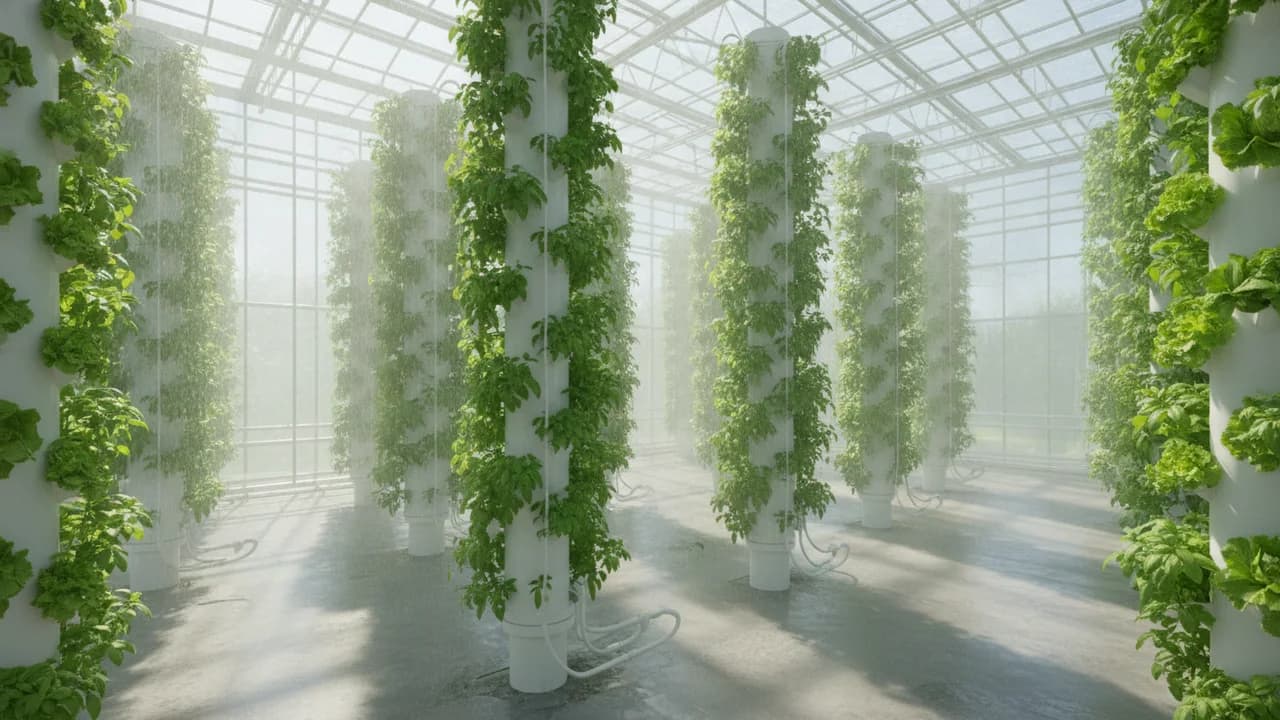
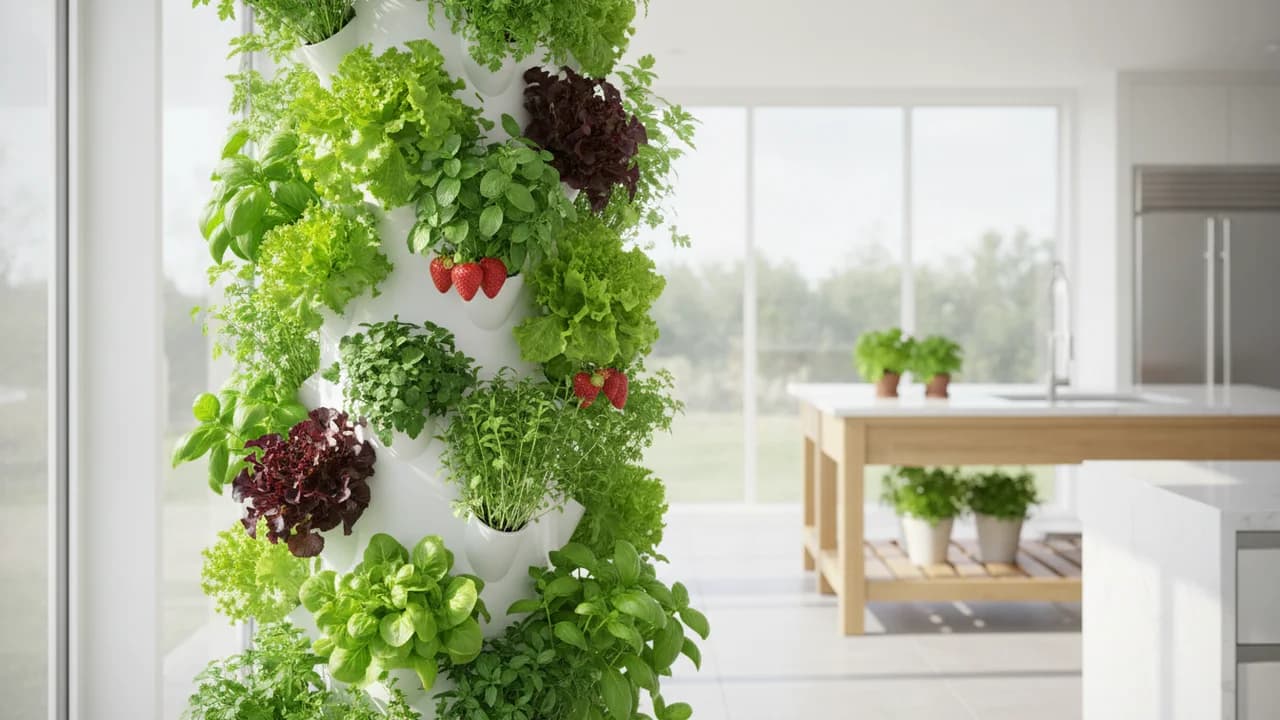
A vertical hydroponic tower opens up a serious growing area in minimal space — our tower, for example, offers 32 planting spots at 180 cm tall and just 0.5 m² of floor space. But not every plant is made for the tower. The secret to success isn't fitting in as many different species as possible, but choosing plants that love this exact system: light, fast-growing and with shallow roots.
In this guide we go through the plants that deliver the best results in the tower, the ones best avoided, and concrete pH and EC values for each crop. The goal is for your very first growing cycle to succeed — without costly mistakes.
Why Vertical Towers Are Ideal for Certain Plants
A vertical tower works by circulating the nutrient solution from top to bottom, wetting the roots on each tier and returning to the tank. This means every plant must be content with a relatively small, shallow root space and must not be too heavy, because it relies on the module holder rather than on deep soil.
The best performers are crops that share three traits: a shallow root system, low to medium above-ground mass, and a fast growth cycle. Leafy greens and low herbs fit this profile exactly — they are harvested within a few weeks, take little space and provide a continuous yield if you harvest using the "outer leaves" method.
- Shallow roots — lettuces, herbs and Asian greens need no deep soil and work perfectly in the tower's net cups.
- Low mass — light plants don't burden the modules or tip the system; heavy, large plants are unsuitable.
- Fast harvest — crops ready in 3–6 weeks deliver several cycles per year and keep the tower productive.
- Tolerance of circulating solution — plants that like stable root moisture (lettuce, basil) thrive better than those needing pronounced wet-dry cycles.
The Best Plants for the Tower — The Big Table
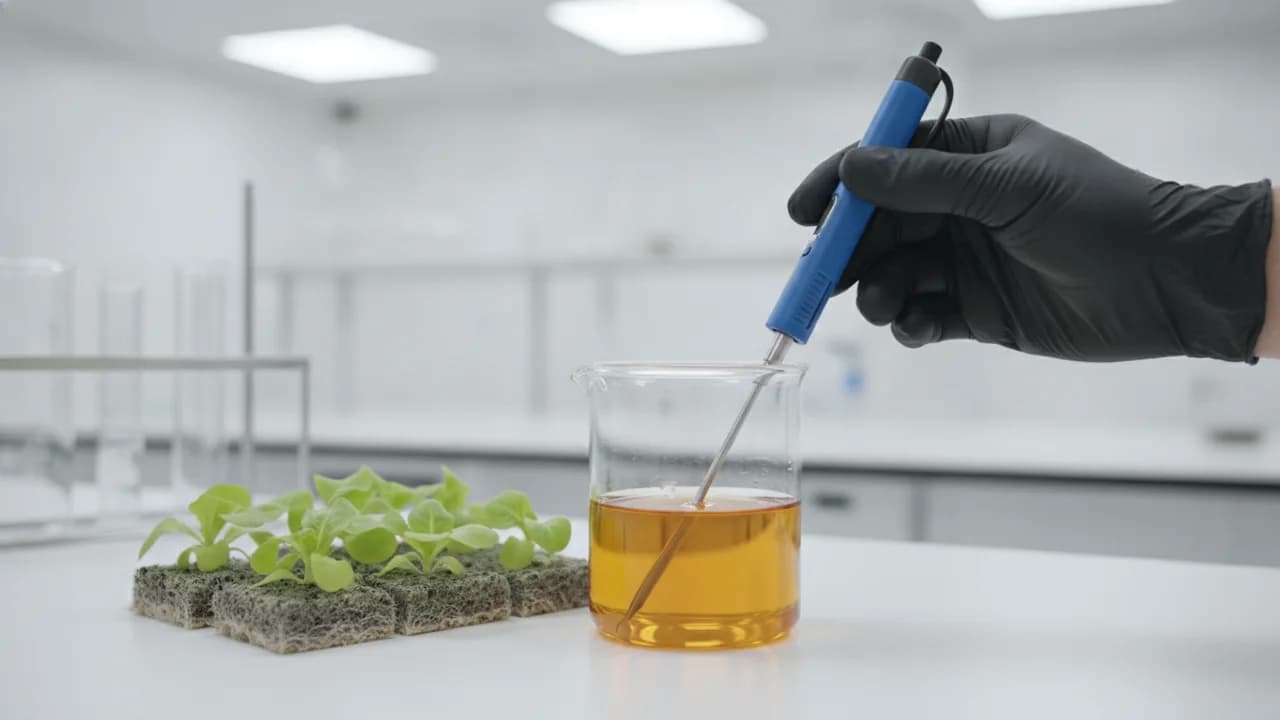
The following table summarizes proven crops for the vertical tower, with realistic pH and EC ranges (electrical conductivity of the nutrient solution), approximate harvest time and one practical tip per plant. The values are a guideline for a tower outdoors or indoors with sufficient light; adjust them to your water and cultivar.
| Plant | Difficulty | pH / EC | Harvest time | Tip |
|---|---|---|---|---|
| Head lettuce | Easy | 5.5–6.5 / 1.2–2.0 | 4–6 weeks | Harvest the whole head or outer leaves; lower EC in heat. |
| Oak leaf lettuce | Easy | 5.5–6.5 / 1.2–1.8 | 4–5 weeks | Regrows fast; ideal for "cut-and-come-again" harvesting. |
| Lollo Rosso / Bionda | Easy | 5.5–6.5 / 1.2–1.8 | 4–6 weeks | Red varieties need more light for intense color. |
| Arugula (rocket) | Easy | 6.0–7.0 / 1.2–1.8 | 3–4 weeks | Fast, peppery yield; regular harvest delays bolting. |
| Spinach | Easy | 6.0–7.0 / 1.8–2.3 | 4–6 weeks | Prefers cooler conditions; bolts quickly in heat. |
| Swiss chard | Medium | 6.0–7.0 / 1.8–2.3 | 5–7 weeks | Harvest outer leaves, leave the heart — yields for months. |
| Kale / Baby Kale | Medium | 5.5–6.5 / 1.8–2.5 | 5–7 weeks | Hardy and durable; baby leaves ready in ~4 weeks. |
| Basil | Easy | 5.5–6.5 / 1.0–1.6 | 3–5 weeks | Pinch the tips so it branches; loves warmth and lots of light. |
| Parsley | Easy | 5.5–6.5 / 1.0–1.8 | 6–8 weeks | Germinates slowly (up to 3 weeks), then yields all season. |
| Cilantro (coriander) | Easy | 6.0–6.8 / 1.2–1.8 | 3–4 weeks | Sow successively every 2–3 weeks; bolts quickly. |
| Mint | Easy | 5.5–6.5 / 1.0–1.6 | 4–6 weeks | Vigorous and dominant; keep it in dedicated tower spots. |
| Chives | Easy | 6.0–6.5 / 1.0–1.8 | 6–8 weeks | Cut multiple times; leave ~5 cm for regrowth. |
| Strawberries | Medium | 5.5–6.2 / 1.0–1.4 | 8–12 weeks | Choose everbearing varieties; ensure good light and pollination. |
| Pak Choi | Medium | 6.0–7.0 / 1.5–2.0 | 4–6 weeks | Fast and rewarding; harvest young to avoid premature bolting. |
Leafy Greens & Fast Winners
Lettuces, arugula and spinach
Leafy greens are the safest choice for any tower and the reason most people start with hydroponics in the first place. Head lettuce, oak leaf and Lollo varieties grow fast, forgive beginner mistakes and deliver a dense, decorative yield. At a pH around 5.5–6.5 and moderate EC, the head is ready to harvest in 4–6 weeks.
Arugula is even faster (3–4 weeks) and brings a characteristic peppery flavor, while spinach prefers a slightly higher EC and cooler conditions. If you harvest the outer leaves instead of the whole plant, the same planting spot can yield for weeks — the so-called "cut-and-come-again" method that maximizes yield per spot in the tower.
Aromatic Herbs
Basil, parsley, cilantro, mint and chives
Herbs are perhaps the most cost-effective category for the tower — fresh herbs are expensive in the store, but in the tower you have them at hand all season. Basil is the star: it loves warmth and light, and regular pinching of the tips makes it dense and branched instead of shooting up and flowering.
Parsley and chives germinate more slowly but are durable and yield for months. Cilantro grows fast but tends to bolt prematurely, so sow it successively every 2–3 weeks for a constant yield. Mint is extremely vigorous and can overgrow neighboring spots, so assign it a dedicated part of the tower or trim it regularly.
- Basil — pinching the tips every 1–2 weeks promotes branching and delays flowering.
- Parsley — patience while germinating (up to 3 weeks), then a whole season of harvest.
- Cilantro — successive sowing is key, as a single plant bolts quickly.
- Mint — keep it separate; it is markedly expansive and crowds out neighbors.
- Chives — cut to ~5 cm; regrows several times per season.
Fruity Highlights (Strawberries)
Strawberries in the vertical tower
Strawberries are one of the few "fruity" crops that really work well in the vertical tower, and they look visually appealing as they hang from the modules. The key is choosing everbearing or day-neutral varieties that fruit continuously rather than just once per season.
Strawberries like a slightly lower pH (around 5.5–6.2) and moderate EC (1.0–1.4). They need sufficient light for sweeter fruit, and indoors, manual pollination with a soft brush significantly increases the yield. Patience is needed — from seedling to the first ripe fruit usually takes 8–12 weeks, but then they bear for weeks.
Asian Leafy Greens
Pak Choi and related brassicas
Asian leafy greens, above all Pak Choi (bok choy), fit the tower excellently: they grow fast, have shallow roots and deliver crisp, juicy stems in 4–6 weeks. At pH 6.0–7.0 and an EC around 1.5–2.0 they form compact, tidy rosettes.
Harvest them young, because in warmth and long days they easily bolt prematurely. Besides Pak Choi, mizuna, tatsoi and baby mustard belong to the same family — all fast, hardy crops that enrich the tower with varied textures and mildly piquant flavors.
What to Avoid in the Tower
It is equally important to know what NOT to plant. Certain plants simply don't deliver good results in the vertical tower or make the whole system harder to run — they are better grown in classic pots or beds.
- Root vegetables — carrots, beets, turnips, root radish and potatoes need depth and a firm medium for root thickening; in the tower's shallow cups they deform or fail to form the edible part at all.
- Large, heavy plants — corn, pumpkins, watermelons and squash have too much mass and root volume for the modules and can destabilize the tower.
- Climbers needing support — cucumbers, beans, peas and large tomatoes need a net or trellis and develop an extensive root system, so they are impractical in the compact tower.
- Large Solanaceae in a small tower — indeterminate tomatoes and larger peppers become too heavy and too tall; at most low, bushy (determinate) varieties with extra support.
- Perennial woody plants — rosemary, lavender and similar slow-growing perennials are not cost-effective in the tower's fast cycle.
Practical Tips for Sowing and Running the Tower
Beginner combination
If you are just starting out, it is easiest to plant one dominant crop that suits similar values. A proven beginner combination is a lettuce mix (head, oak leaf, Lollo) plus some arugula and basil — all share a pH around 5.5–6.5 and a similar EC, so you don't have to balance different requirements in the same tank.
Sowing and seedlings
Seeds are usually germinated in rockwool cubes or grow plugs and transplanted into the tower once they develop 2–3 true leaves and visible roots. Bought seedlings from soil should be carefully rinsed of soil before planting so they don't clog the system or introduce diseases.
Light requirement
Leafy greens and herbs need 12–16 hours of light per day (sun or LED), and fruiting crops like strawberries even more. In the tower, the upper modules usually get the most light, so place light-hungry plants there (strawberries, basil) and leave the lower modules to lettuces and spinach, which tolerate a little less.
Crop rotation in the tower
Even though hydroponics is less sensitive to crop rotation than soil, it pays to rotate crops across modules and to clean and disinfect the system between cycles. This prevents the buildup of pathogens and the depletion of specific nutrients — fast-growing lettuces and herbs can be alternated with somewhat slower plants for a constant yield.
FAQ
Can I grow tomatoes in the tower?
How many plants can I grow at once?
Which plants are best for beginners?
How often do I need to change the nutrient solution?
Do strawberries need different conditions than lettuces?
Can I mix different plants in the same tower?
Sources
- Sharma N, Acharya S, Kumar K, Singh N, Chaurasia OP (2019). Hydroponics as an advanced technique for vegetable production: An overview. Journal of Soil and Water Conservation 17(4):364–371.
- Intercropping Lettuce with Alfalfa Under Variable Nitrate Supply in a Vertical Hydroponic System (2025). PMC. Link
- Effects of electrical conductivity (EC) of the nutrient solution on growth, yield and quality of lettuce under vertical hydroponic systems (2023).
- Resh, H.M. (2022). Hydroponic Food Production (8th ed.). CRC Press.
- Impact of Water pH and Cultivar on Lettuce Growth, Water Use Efficiency, and Nutrient Use Efficiency in Deep Water Culture Systems (2025). MDPI Water. Link