Interest in CBD products for pets has grown sharply in recent years. Dog and cat owners are increasingly asking questions about hemp and its compounds in shops and clinics. At the same time, scientific research in animals is still in an early stage, and the legal framework remains unsettled. For this reason, this text is intended as a calm, factual orientation — not as a recommendation to treat any condition.
What exactly is CBD?
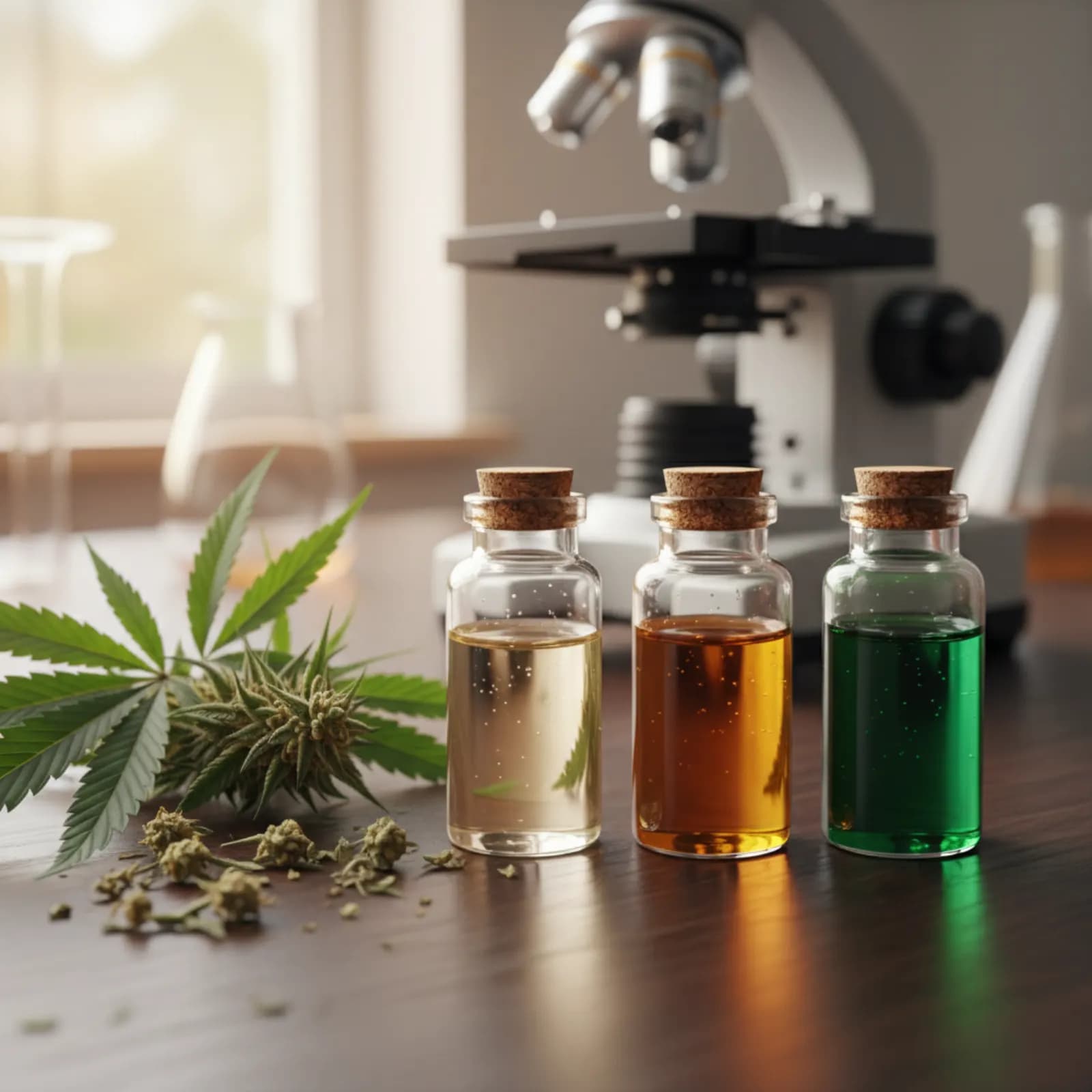
CBD (cannabidiol) is one of the many natural compounds — cannabinoids — found in the hemp plant (Cannabis sativa). Unlike THC, CBD is not considered a psychoactive compound that causes a "high" or intoxication. In products intended for pets it most often comes dissolved in a carrier oil (for example hemp seed oil or MCT/coconut oil), which is why people speak of "CBD oil".
It is important to distinguish the source of the hemp. Industrial hemp legally contains very low levels of THC, whereas marijuana contains high levels of THC. It is precisely this THC that is the key reason why pet owners must be especially cautious.
CBD vs. THC — why the difference is vitally important
This is the most important part of the entire text. CBD and THC are two different compounds. THC is toxic to dogs and cats and should never be present in a product you give to an animal. Dogs have an especially large number of cannabinoid receptors in the brain, which makes them extremely sensitive to THC — even small amounts can cause serious symptoms of poisoning.
The endocannabinoid system in animals
Mammals, including dogs and cats, have what is called the endocannabinoid system — a network of receptors (known as CB1 and CB2) and molecules the body produces naturally. This system is part of the organism's normal physiology. The existence of this system is why scientists are examining how cannabinoids such as CBD act in the animal body at all. It is important to emphasise: the fact that the system exists does not automatically mean that supplementing with CBD is beneficial or necessary — those are separate questions to which research is still seeking answers.
Why CBD for pets is a separate product from CBD for people
It may seem practical to give a dog a drop of human CBD oil, but that is the wrong approach. Products for humans and products for pets differ in several key respects:
- Concentration and dosing: human oils are often considerably stronger (higher mg/ml), which makes it difficult to measure out precisely a small dose for an animal weighing only a few kilograms.
- Flavourings and sweeteners: human products may contain flavourings, essential oils (e.g. mint, citrus, tea tree) or sweeteners that can be unsuitable or harmful for dogs and cats.
- Xylitol: this sweetener, common in human products, is extremely poisonous to dogs and must never be present in a product for pets.
- Formulation: pet products are designed with animals' taste and tolerance in mind, without ingredients intended for the human palate.
For all of the above reasons, if you decide to ask about CBD, choose a product explicitly intended for pets. Our range includes a CBD oil formulated for dogs, without xylitol, flavourings or essential oils — but even then the same rule applies: a conversation with your veterinarian comes first.
How to choose a quality product
The CBD product market is poorly regulated, and quality varies drastically. Independent analyses have repeatedly shown that the declared content does not always match the actual content. That is why choosing a product is a matter of careful verification, not of the marketing on the label. Here is what to pay attention to:
| Criterion | What to check | Why it matters |
|---|---|---|
| Laboratory analysis (COA) | A Certificate of Analysis from an independent laboratory for the specific batch. | It confirms the actual CBD content and, crucially, the absence of THC and of contaminants. |
| THC content | An indication that the product contains no THC or is below the legal limit. | THC is toxic to dogs and cats — this is a safety matter, not a stylistic one. |
| Isolate vs. full-spectrum | Whether it is a CBD isolate or a full-spectrum / broad-spectrum extract. | It affects the compound composition; for pets many choose isolate or broad-spectrum precisely to avoid THC. |
| Concentration (mg/ml) | A clearly stated amount of CBD per millilitre, not just the total per bottle. | Without mg/ml it is impossible to measure out a small dose for an animal precisely and safely. |
| Intended for pets | That the product is explicitly for dogs/cats, without xylitol, flavourings and essential oils. | Ingredients meant for people can be unsuitable or harmful for animals. |
| Contaminants | Testing for heavy metals, pesticides and solvents. | Hemp absorbs substances from the soil; a clean product should document this. |
Isolate or full-spectrum?
A CBD isolate contains only purified cannabidiol, without the plant's other compounds. A full-spectrum extract also contains other cannabinoids and substances from the plant, which may include traces of THC. Broad-spectrum is a variant from which the THC has been removed. For pets, many owners and veterinarians — precisely because of dogs' and cats' sensitivity to THC — consider isolate or broad-spectrum as a precaution. Leave the final assessment to your veterinarian.
On dosing — in general terms only
There is no universally "correct" dose that we could prescribe in an article, because it depends on the individual animal, its weight and health status, and should be determined by a veterinarian. What is generally applied in practice and in research is the approach that the dose is calculated according to body weight (per kilogram) and starts from a small, cautious amount.
- Dosing is as a rule tied to the animal's body weight (mg per kilogram).
- The general principle is "start with a small dose" and carefully monitor how the animal reacts.
- Precise measurement requires knowing the product's concentration (mg/ml) and a measuring dropper.
- Any change of dose, as well as the decision to use it at all, should be agreed with a veterinarian.
The golden rule that veterinarians repeat: "start low, go slow" — begin with a small dose and adjust gradually, under expert supervision.
Safety and possible interactions
Although in the available research CBD in animals is mostly described as relatively well tolerated, this does not mean it is without risk. Studies have recorded changes such as mild sedation, digestive disturbances or changes in liver enzyme values. The question of interactions is especially important: cannabidiol can affect the way the body breaks down other medicines, so simultaneous use alongside existing therapy is not harmless. For this reason it is essential that the veterinarian knows about everything your pet is taking.
Research — where we stand at the moment
There is scientific interest in CBD in dogs and cats, but the field is still in an early stage. A few studies at Cornell University (Gamble et al., 2018) and Colorado State University (McGrath et al., 2019) have attracted attention, but these are early, small studies which the authors themselves and professional associations describe as a starting point, not as evidence on which promises should be based. The veterinary community (for example the AVMA) emphasises that much more well-controlled research is needed before any reliable conclusions. That is why we make no claims about effects here — instead we direct you to consult your veterinarian about the possibilities and limitations.
Legal note (Croatia)
The regulatory status of CBD products for animals remains an area without clear, established rules. No CBD medicine has been approved as a veterinary medicine, and products available on the market must not be presented as means for treating, alleviating or preventing disease. CBD products for pets are not veterinary medicines and cannot replace veterinary diagnosis or therapy. Before use, check the current regulations and, above all, talk to your veterinarian.
FAQ
Is CBD the same as marijuana?
Can I give my dog my own human CBD oil?
How much CBD should I give a cat or dog?
What is a COA and why should I ask for one?
Can CBD affect other medicines my pet is taking?
What should I do if my dog accidentally ate marijuana or an "edible" product?
Sources
- Gamble LJ, Boesch JM, Frye CW, et al. (2018). Pharmacokinetics, Safety, and Clinical Efficacy of Cannabidiol Treatment in Osteoarthritic Dogs. Frontiers in Veterinary Science, 5:165. doi:10.3389/fvets.2018.00165
- McGrath S, Bartner LR, Rao S, et al. (2019). Randomized blinded controlled clinical trial to assess the effect of oral cannabidiol administration in addition to conventional antiepileptic treatment on seizure frequency in dogs with intractable idiopathic epilepsy. JAVMA, 254(11):1301-1308. PMID: 31067185
- Di Salvo A, Conti MB, della Rocca G. (2023). Pharmacokinetics, efficacy, and safety of cannabidiol in dogs: an update of current knowledge. Frontiers in Veterinary Science / PMC. PMC10347378
- American Veterinary Medical Association (AVMA). Cannabis use and pets. avma.org
- U.S. Food & Drug Administration (FDA). FDA Regulation of Cannabis and Cannabis-Derived Products, Including Cannabidiol (CBD). fda.gov
- Merck Veterinary Manual. Toxicosis in Dogs and Cats From Tetrahydrocannabinol (THC). merckvetmanual.com
Note: This article is for informational purposes only, does not constitute medical advice and does not replace consultation with a doctor. Consult a doctor before taking any food supplement — especially with chronic conditions, pregnancy or breastfeeding.